Tangerine, Florida  ·  A Local History

They Named the Whole Town
After a Tree in Her Yard


A man who had just run the largest farmers’ movement in the country came to a little lake in the Orange County pinewoods to save his lungs. He planted every acre he could reach in fruit — and then let the town be named, not for himself, but for one small exotic tree by a neighbor’s front door.

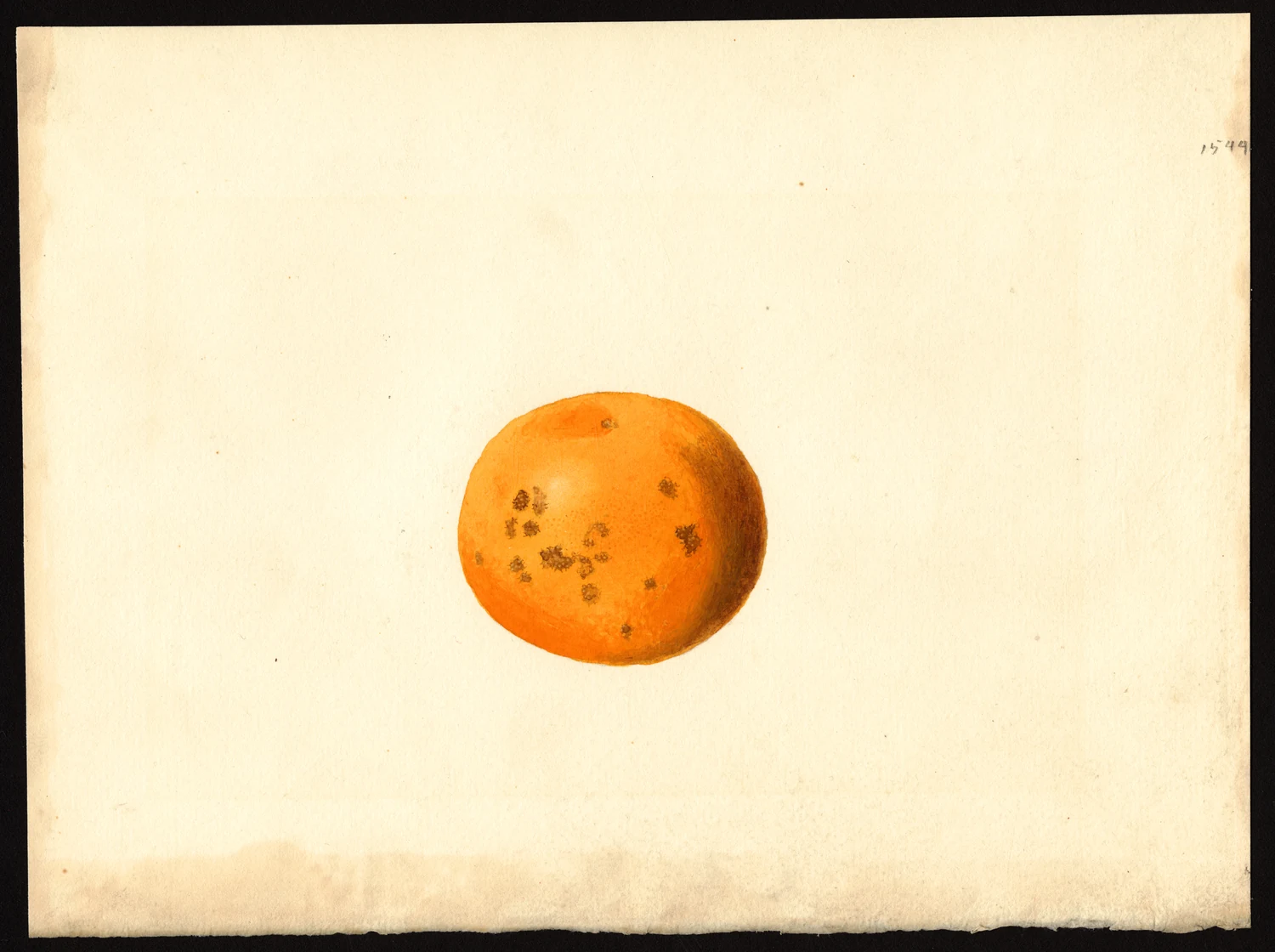
A botanical watercolor of a single ripe tangerine, its skin faintly freckled, painted on cream paper with pencilled collection notes in the lower margin.
Tangerine — Orange County, Florida
The fruit the town is named for. A U.S. Department of Agriculture pomological watercolor of a tangerine, painted by J. Marion Shull in 1928 from a specimen grown in Orange County, Florida. USDA Pomological Watercolor Collection, National Agricultural Library (public domain).

In 1879 a handful of settlers crowded into a house by a Florida lake to settle an argument about what to call the place. They had been calling it two things — Olaville, and Lake Ola, both after the little lake it sat on — and neither had stuck. They could have named it for the man who had talked most of them into coming. Instead they looked out the door of the house they were sitting in, saw the tree growing by the step, and named the whole town after the fruit on it.

The house belonged to a woman named Bessie Heustis. The tree by her door was a tangerine. And so a town got its name the way you might name a cat — after the first nice thing you happened to see.

What makes that strange isn’t the tree. It’s the man they didn’t name it for.

The man who’d run the whole movement

Bessie Heustis’s brother-in-law was a Northerner named Dudley W. Adams, and a few years before he turned up in these pinewoods he had been one of the most important farmers in America — not a rich one, a powerful one.

A nineteenth-century portrait of a man with a long full beard, receding hair and a steady gaze, in a dark coat.
Dudley W. Adams
The Grange man himself. Dudley W. Adams (1831–1897), second Master of the National Grange, who settled on Lake Beauclaire in 1875 and died in Tangerine in 1897. Portrait courtesy of the National Grange.

In 1873 he had been elected Master of the National Grange — the head of the Patrons of Husbandry, the largest farmers’ organization the country had yet seen. Hundreds of thousands of farm families belonged. And what the Grange was doing, right as Adams took the top job, was taking on the railroads over the prices they charged a farmer to ship a crop to market. That fight ran all the way up to the Supreme Court and helped put the first real rules on the railroads. Adams was, for a couple of years, the public face of it.

An ornate 1873 color lithograph titled 'Gift for the Grangers', crowded with scenes of farm life — a farmer at the center resting on a spade, plowing, harvesting, a farmhouse, and vignettes of rural work arranged in decorative panels.
What he came from — 1873
“Gift for the Grangers,” 1873. A promotional print sold to members of the farmers’ movement Adams led — the farmer at the center, every panel a scene of the life the Grange was organizing to protect. Chromolithograph by Strobridge & Co., Cincinnati; Library of Congress (public domain).

Then his lungs gave out on him. Adams had a bronchial ailment that the Iowa winters were not helping, and in 1875 he did what a lot of worn-down Northerners were doing that decade: he went looking for warm air in Florida. He found it on the eastern shore of Lake Beauclaire, a few miles south of what would become Mount Dora, and built himself a cabin.

He came for room, and planted it

What a sick man from the North found out here was air, and space, and almost nothing else. No town yet — just lakes, pine, sand, and as much ground as a person cared to clear. So Adams did the only thing a lifelong horticulturist knows how to do with open ground: he planted it. A big orange grove, and around it every other kind of fruit tree he could talk into growing.

A sepia stereoview photograph from the 1870s of a man standing high on a tall A-frame ladder picking fruit from a large orange tree, with baskets full of oranges on the sandy ground below.
Picking the crop — Florida, 1870s
The work the whole place ran on. A man on a ladder picking oranges, with filled baskets below — a Florida grove of exactly Adams’s era. Stereoview by W. H. Cushing, St. Augustine, 1870s–80s; New York Public Library (public domain). A representative grove of the period, not Tangerine itself.

He was the sort of man who names things. The little lake next to his he called Angelina, after a younger half-sister. He kept writing even out here — bits of verse about the way the sun went down over Lake Beauclaire. A man with that much ground and that much enthusiasm doesn’t sit still, and Adams didn’t. He talked other families into coming and taking their own five and ten acres. He organized a development society in 1885 and got a schoolhouse built the next year. He helped start Florida’s state horticultural society and ran it until the day he died, forever telling growers to bud better fruit onto their trees.

So when the neighbors sat in Bessie Heustis’s front room in 1879, the obvious name on the table was his. They passed on it. They named the town for the tree.

Why a tangerine, of all things

Here’s the part that’s easy to miss from this far away: in 1879, a tangerine was a slightly exotic thing to have growing by your door. The fruit had come to America only a few decades before, and it carried the name of the place its first shipments sailed from — Tangier, the Moroccan port across the ocean. To name your brand-new Florida settlement “Tangerine” was a little like naming your town today after a fruit most of your neighbors had only recently learned to pronounce.

A botanical watercolor plate of a Dancy tangerine shown whole above a cut cross-section, with handwritten collection notes along the bottom margin.
The Dancy — a Florida tangerine
The fruit that caught on. A USDA watercolor of the Dancy, the tangerine variety that would make Florida famous for the fruit in the decades after Tangerine was named. USDA Pomological Watercolor Collection, National Agricultural Library (public domain).

But it took. The groves that Adams championed came in, the sweet loose-skinned fruit sold, and the name on the post office matched the name on the trees. The settlers had bet their town on citrus the same way every grove colony in the county had — and for a long stretch the bet paid.

An 1890s photograph of an enormous spreading orange tree heavy with fruit, with two small figures of men standing beneath it for scale.
One tree, two men for scale — about 1893
What a good Florida grove looked like. A single orange tree so large that two men stand under it for scale, near Palatka, about 1893. Public domain. A representative Florida grove of the era, not Tangerine itself.

It didn’t pay forever. The hard freezes that emptied so much of central Florida’s citrus country reached these lakes too, and Adams himself didn’t long outlast the worst of them — he died here in 1897. But the town he’d seeded did something more interesting than hang on a single crop. It used the room for something else.

What they did with the rest of the ground

With the founder gone, it was the women of Tangerine who kept building. In 1909 they organized a society for “the improvement in every way of the interests of the town,” and a couple of years later one of them, Addie Earle, simply handed over a lot so the town could put up a hall on it. They finished the building in 1912. The whole thing cost four hundred and twenty-three dollars.

That is the pattern of the place, if you stand back far enough to see it. Somebody has a piece of ground. Somebody decides the town needs a thing — a school, a church, a hall, a park — and the thing gets built out on ground that a neighbor gave. Years later a widow named Sadie Trimble gave the county a whole peninsula of land between two of the lakes, and it is a park to this day.

A 1921 photograph of a modest two-story wood-frame building with a second-story porch, a 'Post Office' sign on the ground floor, standing on bare sandy ground.
Tangerine — 1921
The whole town, more or less. The Tangerine post office in 1921 — a two-story frame building on open sandy ground, the kind of small that a town stays when there has always been more land than buildings to put on it. State Archives of Florida, Florida Memory (public domain).

The old hall burned down one night in 1972 — the Zellwood fire truck made it over in seven minutes and still couldn’t save it — and the town did the only thing this town ever does. It built another one, on the same donated ground, and named it for the neighbor who led the fundraising.

A whole town named for one tree by one front door — because out here, the ground by your door was always the thing you had plenty of.

What’s still out there

You can still find the bones of all of it. The little community church Adams’s neighbors started in the 1880s still holds its corner, with the rebuilt hall beside it. The old schoolhouse is a day care now, full of a different kind of small voice. Trimble Park still runs out between Lake Beauclaire and Lake Carlton, and Lake Ola — the lake that gave the town its first, rejected name — is still counted among the clearest in Central Florida.

A tinted mid-century postcard showing a Florida orange grove from the air: neat rows of trees surrounding a single house with a red roof, a dirt lane curving through.
The room, in rows
One house, and a great deal of ground around it. A Florida orange grove seen from the air — a mid-century tinted postcard that catches the shape of the whole idea: a single home set in far more land than the house itself needs. Tichnor Brothers postcard, Boston Public Library. A representative Florida grove scene, not Tangerine itself.

And the thing that never left is the room. Drive the roads around Tangerine now and you are back in that old habit of spreading out — groves that outlived the freezes, pastures, nurseries, big quiet lots where the next house sits a long way off. It is still the kind of place where a family owns more ground than the house in front of it strictly uses.

Which is the whole story, really. A man came here for room and planted it. His neighbors built their town out on ground that people gave. And they named the place for the smallest thing in the whole scene — one tree, by one door, on a piece of ground with space to spare.

A present-day note · Orange Tiny Homes

The next thing you plant usually goes out back.

Tangerine was built on a simple rural-Florida habit: if you’ve got the ground, you put something useful on it. Adams planted a grove. The women of the town put up a hall on a lot a neighbor gave. A widow turned a peninsula into a park. The land out back was never decoration — it was where the next idea went.

That habit is still good. These days the thing people build out back has a name — an ADU, an accessory dwelling unit — and it’s what we build. A granny flat so a parent can live close and still have their own front door. A guest house. A rental out back that helps carry the place. A tiny home on the far corner of the lot. Same instinct those roomy Tangerine lots were settled on, just with a kitchen, a bathroom, and a permit.

And you don’t need a homesteader’s acreage to do it. Across greater Orlando and Orange County — the big grove-and-pasture lots out by Tangerine, Zellwood, and Clarcona, sure, but also ordinary yards in Apopka, Ocoee, Winter Garden, and Pine Hills — a lot of homes already have the space. What actually decides it comes down to your own address:

The real answer to “is there room out back for this?” isn’t a guess — it’s a handful of facts about your lot. That part we can check for you.

Put in your address and we’ll pull what your parcel allows and tell you whether a granny flat, guest house, rental, or tiny home actually fits — before you spend a dollar on drawings.

Start the ADU Fit Check→
Sources & Photo Credits

On the history

Nineteenth-century Tangerine survives mostly in local-history accounts, church and society records, and the biography of Dudley W. Adams, rather than a deep photographic archive of the town itself. Where this page shows a grove, a picking scene, or an aerial from elsewhere in Florida, it is labeled in the caption as a representative image of the era and region, not a photograph of Tangerine. The 1921 post office is a genuine photograph of the town; the two tangerine watercolors are USDA botanical plates, one painted from an Orange County specimen. Full notes in source-record.md.

Photographs & documents

  1. Tangerine (Orange County specimen), USDA pomological watercolor — painted by J. Marion Shull, 1928, from a tangerine grown in Orange County, Florida; public domain. U.S. Department of Agriculture Pomological Watercolor Collection, Rare and Special Collections, National Agricultural Library. Shown as the hero. File: tangerine-watercolor-orange-county. Commons
  2. Dudley W. Adams portrait — portrait of Dudley Warren Adams (1831–1897), second Master of the National Grange; courtesy of the National Grange. File: dudley-adams-portrait. nationalgrange.org
  3. “Gift for the Grangers,” 1873 — chromolithograph published by J. Hale Powers & Co., produced by Strobridge & Co., Cincinnati, 1873; public domain, Library of Congress. A promotional print for members of the farmers’ movement Adams led. File: gift-for-the-grangers-1873. loc.gov
  4. Picking oranges in a grove — stereoview by W. H. Cushing, St. Augustine, Florida, 1870s–80s; public domain, New York Public Library. Cropped to a single frame. A representative Florida grove of Adams’s era, not Tangerine. File: picking-oranges-grove-1870s. Commons
  5. Dancy tangerine, USDA pomological watercolor — the Dancy variety (Citrus reticulata); public domain, USDA Pomological Watercolor Collection, National Agricultural Library. File: dancy-tangerine-watercolor. Commons
  6. Orange grove near Palatka, Florida — photograph, about 1893; public domain. A representative large Florida grove of the era, not Tangerine. File: orange-grove-palatka-c1893. Commons
  7. Tangerine, Florida post office, 1921 — photograph of the genuine town; public domain, State Archives of Florida, Florida Memory (item 345134). File: tangerine-post-office-1921. floridamemory.com
  8. Florida orange grove from the air — mid-twentieth-century tinted postcard, Tichnor Brothers; Boston Public Library, CC BY 2.0. A representative Florida grove scene, not Tangerine. File: fl-orange-grove-aerial-postcard. Boston Public Library via Flickr

Original downloads and a full research record are kept alongside this page in assets/images/originals/ and source-record.md. Representative images (the picking scene, the Palatka grove, the aerial postcard) are identified as such in their captions. No historical image was altered in any way that changes its content; the Polaroid frames and handwritten notes are CSS added around the photographs, never onto them. The stereoview was cropped only to show a single frame.