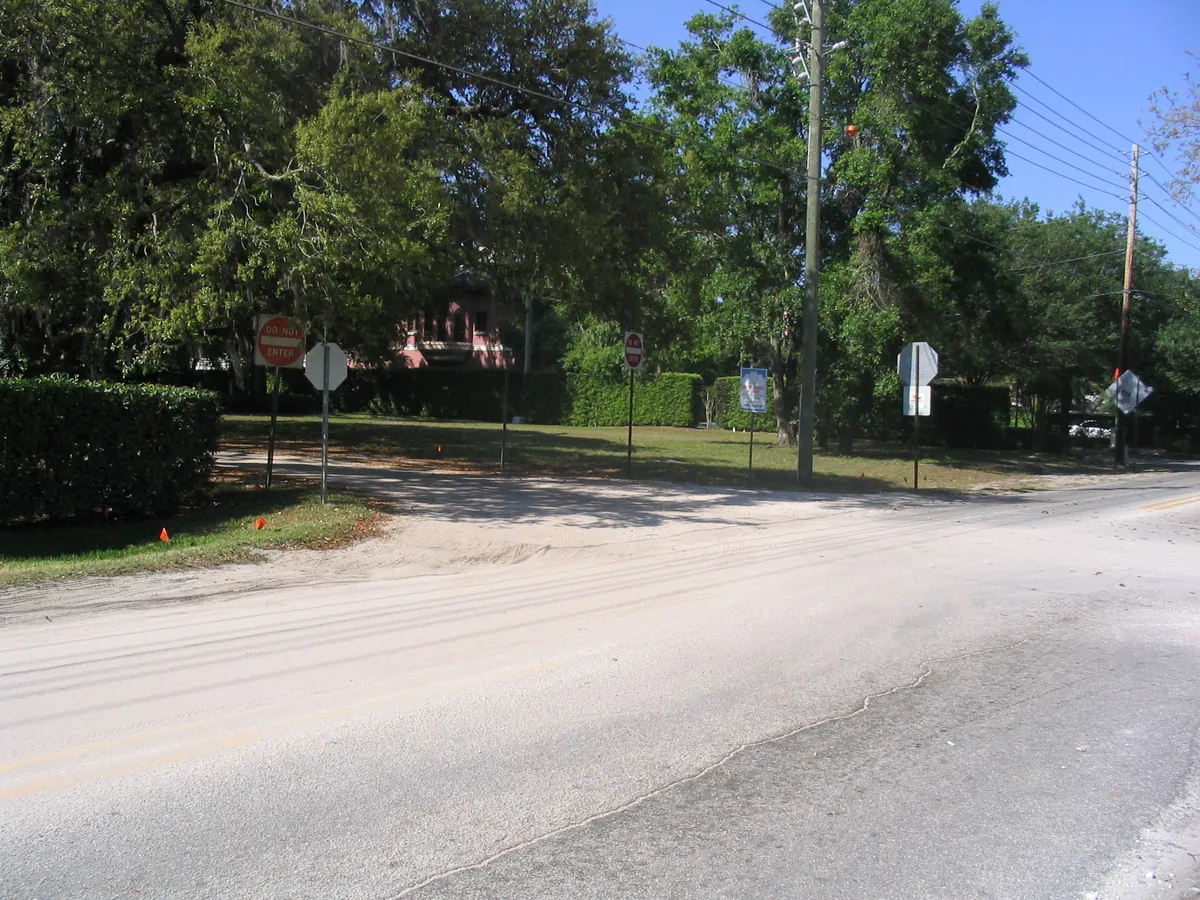
Twenty minutes from downtown Orlando, close enough that you can see the theme-park fireworks from a dock, there is a town where a lot of the streets are made of sand. Not gravel waiting on a budget. Sand, on purpose, kept that way by law. You can drive the newest luxury SUV down a lane that looks the same as it did when the only traffic was a mule and a fruit wagon.
So here’s the thing a normal person wonders, bumping along one of them for the first time: who fights to keep a dirt road? What are they holding onto?
The town between two lakes
The town is Windermere, and it sits on a thin neck of land between Lake Down and Lake Butler, part of a string of clear lakes stitched together by canals. An Englishman platted it in the late 1880s and named it for Lake Windermere back home, in the English Lake District. The records don’t fully agree on who deserves the credit, which is its own small clue about how quiet this place started out. Nobody was keeping careful minutes. They were too busy clearing ground.
And the ground was the whole draw. Big open lots, high and dry between the lakes, with water on every side that a boat could carry you across. People came down, claimed their acres, and built what they needed out where there was space to need it.

What did they build? To start with, oranges. Thousands and thousands of acres of them.
A world made of oranges
By the turn of the century this little corner of Florida was one of the biggest citrus regions on earth. An improvement company laid out the town and the groves together, and the trees went in everywhere the land would take them, right down to the lakeshores. The lakes weren’t just scenery. Big water holds the day’s heat and lets it back out slowly overnight, so a grove on a lakefront runs a few degrees warmer than one out in the open when the cold comes down. For a thin-skinned fruit that dies in a hard frost, a few degrees is the whole ballgame. People planted by the water because the water was insurance.

It was a good life if you had the patience for it. A grove takes years to come into fruit, so planting one was a bet on staying. Whole families built their futures on the idea that the trees would be there, and heavier every winter, for the rest of their lives.

Then came the winter that broke the bet.
Two cold nights
In December of 1894, cold air pushed all the way down the peninsula and the temperature fell into the teens. That first freeze stripped the fruit off the trees and left it lying on the ground, acres of oranges rotting where they dropped. Growers took the hit, told themselves the trees were still alive, and waited for spring. Then in February of 1895 it happened again, harder, and that second freeze went past the fruit and killed the wood. People remembered the sound of sap freezing and splitting the trunks open like gunshots in the night.

What those two nights did is hard to picture now. Across the citrus country, growers reported something like twenty-one thousand acres of planted groves that, the next season, produced not one box of fruit. Not a light year. Not a down year. Nothing. The heart of Florida citrus pulled up and moved south, chasing warmer ground, and it never really came back to the lakes around Windermere. Men who had planted their whole lives into those trees walked away from land that was suddenly worth nothing, because the thing that made it valuable was standing there dead.
What the freeze couldn’t take
Here is where most Florida boom towns just quietly disappear. The industry leaves, the people follow, the plat goes back to palmetto. Windermere didn’t do that. It did something stranger. It stayed small, and it dug in on being small.
The big lots never got chopped up into the tight grids they used elsewhere. The one-room schoolhouse from 1890 is still standing, the oldest one left in the whole county. And the sand roads, the ones that cost almost nothing because nobody paved them, turned into the thing the town decided to defend. Over and over, somebody has floated the obvious modern fix, lay down asphalt, be like everywhere else, and over and over the town has said no and written the no into law.

If you think about it, keeping a dirt road is a weird thing to fight for. It’s dustier. It washes in a hard rain. It is objectively less convenient than asphalt in every way except the one that matters to the people who live there: it keeps the place from filling up. A sand lane with no curb and no streetlight is a quiet promise that this is still a town with space in it, not another subdivision.

And the water the growers planted beside is still the best thing here. Lake Down, nearly nine hundred acres of it, is the headwater of the whole chain, which the state protects as some of its cleanest. The oranges are a century gone. The lake that was supposed to save them is right there, same as ever, lapping at the back of the same big lots.
Room, taken to the far end
Which brings us to the newest thing on that shoreline, and to a name you may have come here looking for. On the south side of Lake Down, near the gates of Isleworth and the public boat ramp, a handful of enormous houses went up a few years back on a short gated lane called Lake Down Reserve. Each one runs well past seven thousand square feet. They are about as far from a sand-road cottage as a building can get.

But look at what those houses actually are, underneath the size. Somebody got a piece of ground with room on it, on the exact water the grove men prized, and built the biggest thing they wanted. That is not a new idea here. That is the oldest idea here. The homesteaders did it with a house and a barn and a packing shed. The freeze cleared the slate. And the instinct that first filled this land, get room, build on it, just kept going, all the way up to a seven-thousand-foot house where an orange grove used to freeze.
So the sand road at the front of the book makes sense now. It was never really about the road. It was about keeping the room the road runs through, the one thing two cold nights, and a hundred years of Orlando growing up all around it, still haven’t managed to take.


